
Frostrail The train and the Eden Engine
Fuel, heat, carriages, and why the locomotive is the run.
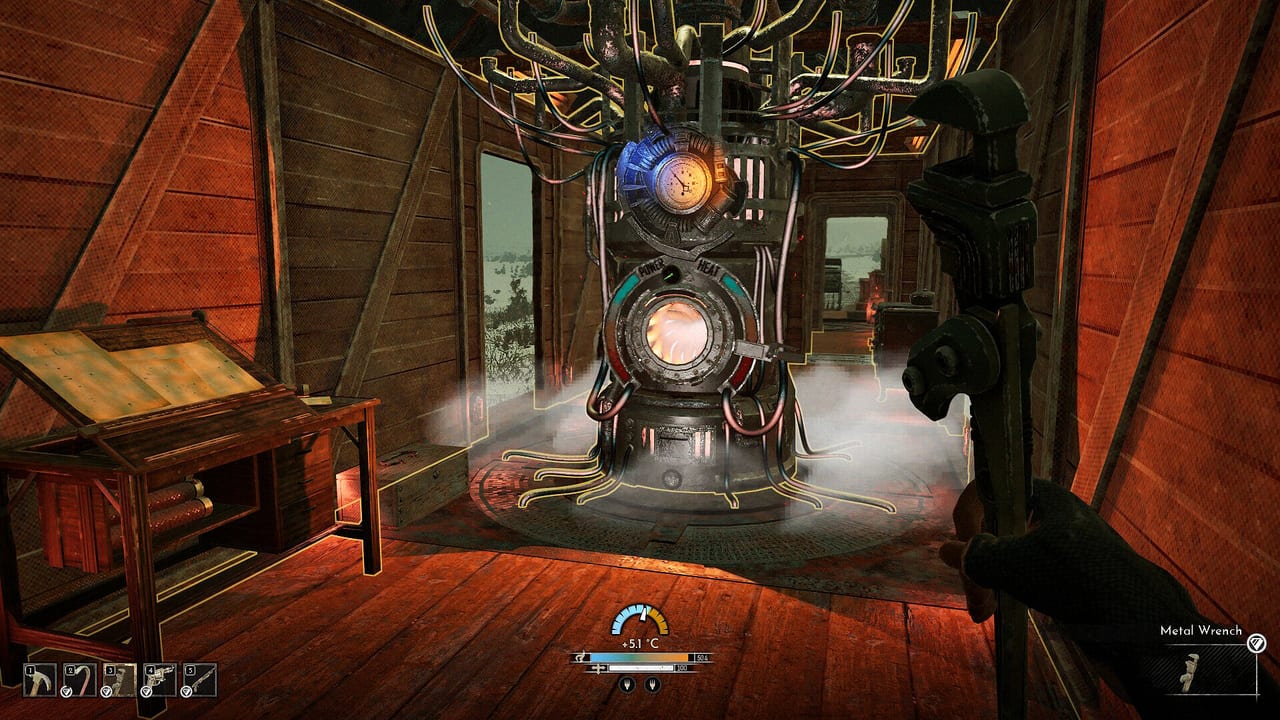
Your train is not a spawn room with a loading screen attached. FakeFish’s own language is blunt: the locomotive is refuge, transport, and the only way forward. You fuel the Eden Engine, manage its power, reinforce walls, add weapon stations, grow carriages, and park Relics on board for temporary buffs. If this page feels longer than a gun guide, that is the point. Guns are replaceable. A cold boiler is not.
Pair this with How to Play for the stop loop and Survival for what happens after you step into the snow.
The Eden Engine is two resources, not a cutscene
Interior shots from tests show a boiler with Power and Heat labeled on the machine, pipes everywhere, and a temperature widget on the HUD. That is the whole metaphor made literal. Power moves the pilgrimage. Heat keeps the people who still have to craft and repair from becoming another revenant story.
Treat engine work as a loop:
- Fuel before you brag. A screenshot of a dungeon shrine does not move the train. Salvage that burns belongs in the boiler before it belongs in a display crate.
- Read Power versus Heat. If a test build lets you starve one to feed the other, say the trade out loud in co-op. Silent trades are how duos freeze while the wheels still turn.
- Do not leave the boiler unattended during a blockage. 2026 notes folded train-defense encounters into obstacle-clearing. The engine player is in the fight whether they wanted a gun or a wrench.
Repair tools show up in the same car — wrenches and hammers on the hotbar — because FakeFish reworked item repair onto dedicated workstations. A dented engine is a bench problem, not a “we will find a new train.”
Cab literacy
The cab is a second HUD. Captures show:
- Pressure — a large gauge with a colored arc. If it is in the dirt, you are not “saving fuel,” you are parking.
- Speed — smaller dial. Speed is not always the goal; noise draws things, and obstacle-clearing exists.
- Consumption — how hard the machine is drinking. High consumption plus an empty salvage pile is a timer you already lost.
- A window onto −28 °C tracks. That number is a briefing for the next outing, not decoration.
If you cannot find these widgets in the tutorial, stay in the tutorial. Controls lists the verbs; this page tells you why they matter.
Grow the train on purpose
Official copy: reinforce walls, craft weapon stations, upgrade the engine, add carriages, crafting stations, and storage. Spring 2026 also added progression that carries between levels, so a carriage you bolt on now is not a souvenir — it is next map’s spawn.
Spend order that survives most test builds:
- Heat and fuel security. Extra tank or better burn beats a pretty gun you cannot feed. See weapons only after the boiler is honest.
- Repair bench access. If people queue for the only workstation, you will leave dents in the next blizzard.
- Storage that you actually fill. Empty wagons are weight and defense surface for no gain.
- Weapon stations that cover the angles you already die on — rear door, roof, snow-side window — not a 360 turret fantasy.
- Comfort and clothing storage so survival loadouts are a swap, not a scavenger hunt in a moving closet.
Multiple clothing sets arrived in 2026 for a reason: the train is where you change armor, not the cellar under fire.
Defense is part of driving
Revenants and worse hunt engine noise. Obstacle-clearing is no longer a quiet mini-game. Playtest images from inside a smashed carriage — teammate firing, creatures on the rails — are the expected picture.
Rules:
- One person stays a shooter on the train whenever two or more are off it. That is a co-op job called Rear or Engine, not a personality type.
- Do not open every door “for visibility.” Doors are heat and angles.
- If a defense encounter starts, loot is paused. Relics in a backpack do not fire themselves; they activate aboard.
Relics are train weapons with a fuse
Dungeons hide Relics. You bring them home and switch them on for temporary buffs during the pilgrimage. That sentence should change how you path a vault:
- A Relic is not safer in a chest “for later” if later is a wipe.
- Activating during a calm stretch wastes a buff you needed for the next defense encounter.
- Activating while three people are still in a shrine and the engine is solo is how you buff a corpse.
Use-cases and cautious ranks: Relics. The mechanical home of a Relic is this page, not the dungeon page.
Levels, exits, and the myth of one perfect fortress
New levels with multiple exits mean you can skip a death dungeon and still advance. The train has to be ready for whichever exit you pick — fuel for a longer roll, or guns for a fight you already hear. Do not overfit the consist to a single vault you might refuse.
Early Access, planned for Q4 2026, is supposed to add more biomes, unique locations, dungeons, loot, and train upgrades over about a year. Do not spend emotional energy min-maxing a carriage meta that FakeFish has already promised to expand. Track promises on the roadmap.
When the locomotive is stable, your deaths move outside. That is Survival and the checklist. When the locomotive is not stable, ignore every other wiki page until the Pressure needle agrees.
Frequently Asked Questions
Quick answers to the most common questions.
What is the Eden Engine in Frostrail?
The steam train’s life-support core. You fuel it and manage power and heat so the pilgrimage can continue. A dead engine is a dead run.
Do Relics work in the dungeon?
You find them in dungeons and activate them on the train for temporary buffs. A Relic in a backpack during a fight is not “in play.”
Should I upgrade guns or the train first?
Train first: heat, fuel, repair. Then a gun you can feed. Ranked firearms wait on the weapon tier list.
Why are there fights while I clear the tracks?
Because FakeFish integrated train-defense encounters into obstacle-clearing. Driving is a combat shift. Assign a rear guard in co-op.